Subtitles Ruined My Comfort Show (and Then Rebuilt It Better)
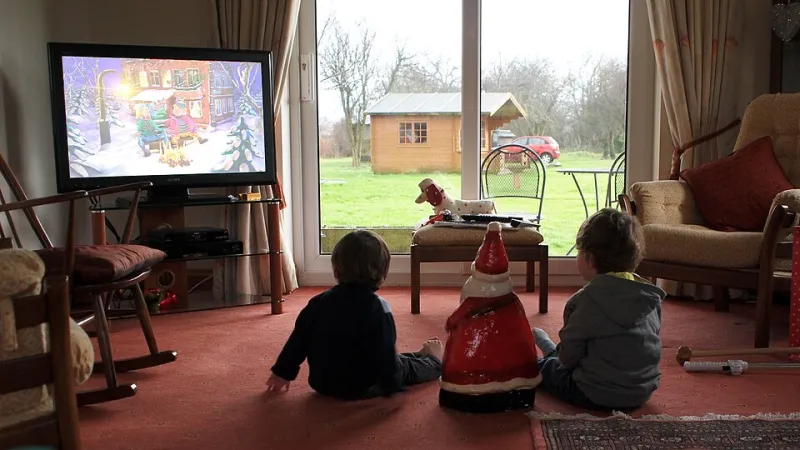
Photo: Julian Tysoe, CC BY 2.0, via Wikimedia Commons
I have seen this show — let's call it my show, because if you're reading this blog you already have one too — at least nine times through. I know the beats the way you know the layout of your childhood kitchen. I can hear the cold open before it happens. So when a friend suggested I rewatch it with subtitles on, I laughed. What could captions possibly teach me about a show I've practically got tattooed on the inside of my eyelids?
Reader: everything. Everything could captions teach me.
The Week I Found Out I'd Been Making It Up
Day one, episode two, and the illusion cracked. A line I have quoted at parties — quoted, with confidence, for years — turned out to be not what I thought. I'd been hearing one thing and the writers had said another, and honestly, my version was better. But that's not the point. The point is I'd spent a decade living inside a slightly wrong version of a text I claimed to know cold.
By day three I had a notes app going. By day five it had sections. By day seven I realized I wasn't rewatching a comfort show anymore — I was doing close reading, the thing I swore off after college, except now nobody was grading me and I could do it in pajamas.
Throwaway Lines Are Never Throwaway
Here's what captions exposed that my ears had smoothed over: the writers of this show hide entire character arcs in dialogue that sounds like filler. A background line about a sister nobody mentions again in season one becomes the emotional spine of season four. A joke about someone's terrible coffee order is actually a grief metaphor wearing a funny hat.
When you watch without captions, your brain does this merciful thing — it summarizes. It takes the rapid-fire banter and compresses it into they're joking, they love each other, moving on. Captions refuse the summary. They slow you down to the speed of the actual page. And at page speed, you notice that the funniest line in the scene is doing setup for the saddest line two episodes later.
This is the craft lesson I keep turning over: good dialogue is load-bearing even when it sounds decorative. The writers trusted that some viewers would never catch it. They wrote it anyway. That's a level of faith in the work I want to bring to my own drafts — putting things in for the one reader who's paying attention at that level, even if that one reader is future me with captions on.
Mishearing as Autobiography
The stranger discovery was psychological. The lines I'd misheard for years weren't random errors — they were Rorschach tests. I'd swapped a character's sarcastic dismissal for something more hopeful, because apparently that's who I needed that character to be when I first watched this at twenty-two. My mishearings were a diary of what I wanted from life at the time.
Now I wonder what this means for readers of my own writing. Whatever I put on the page, people will run it through their own hearing aids — their biases, their longings, their bad speakers. Some of what they take away won't be what I wrote. And maybe that's not a failure of communication. Maybe that's just what happens when art meets a person.
Small Details, Heavy Lifting
The last thing captions gave me was a renewed respect for the smallest choices. A character says a name instead of a nickname in one scene, and the caption makes you see it — literally see the letters — and feel the temperature drop. Nobody points it out. There's no musical sting. It's just two extra syllables doing the work of a monologue.
We talk a lot in writing circles about big swings: the twist, the reveal, the line you underline. But a week of subtitles taught me that the emotional weight of a story often lives in details so small your ears skip them. The writers knew. They put them there anyway, like notes tucked into coat pockets for someone to find years later.
So yes, subtitles ruined my comfort show. Then they rebuilt it, denser and stranger and more generous than before. I'm not saying you should rewatch your show with captions on. I'm saying you should do it, immediately, with a notes app open — and prepare to meet the version of the story you've been too comfortable to actually see.