The Episode That Made Me a Writer, Annotated Live by Past Me and Present Me
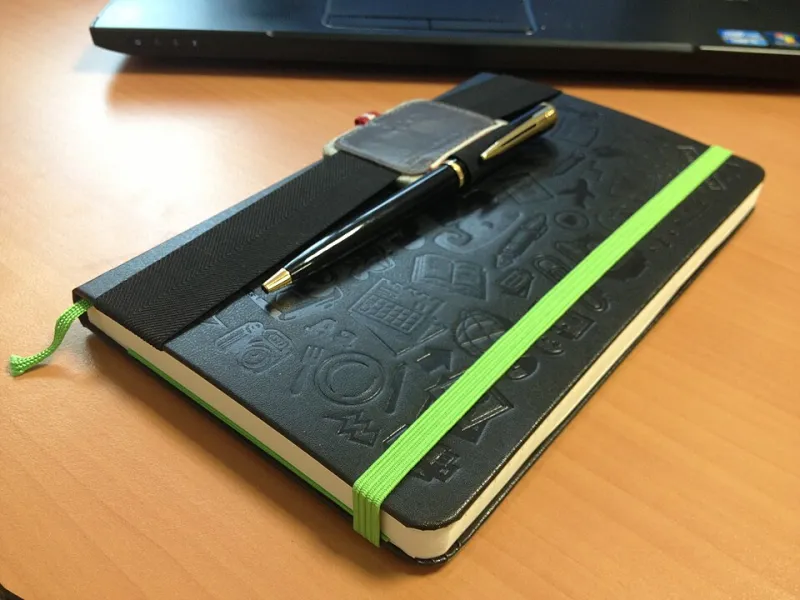
Photo: Guy Sie from Utrecht, Netherlands, CC BY-SA 2.0, via Wikimedia Commons
The episode is "The Suitcase" from Mad Men — season four, episode seven — and I have claimed for fifteen years that it's the reason I do this job. Every writer has one. The episode that reaches through the screen, grabs you by the collar, and says, oh, this is a thing a person can make. Mine aired in 2010, when I was a junior at UW-Madison eating string cheese over my homework, and I remember the exact feeling of watching Don and Peggy share that burger at 3 a.m. and thinking: someone wrote that. On purpose. A human being sat in a room in Los Angeles and decided that two sad people should split a meal.
But here's the thing I'd never done: I'd never actually gone back and studied it. I'd only ever felt it. So last Sunday I queued it up with a notebook and a rule: log everything, time-stamped, no skipping. Boredom included. Especially boredom.
The Diary Nobody Asked For
0:00–8:00 — Restless. Cold open, Don alone in the office, and honestly? My thumb hovered over the skip button. Nothing "happens." Present-me, the one who's written for a living for a decade, noted in the margin: he's establishing the lie Don will tell later. Fifteen-year-old me would've been on TikTok by minute four.
14:00 — Fine, I'm in. Peggy's birthday dinner, the boyfriend's awful toast, and I caught myself leaning forward. Not because of dialogue. Because of a chair. Where Peggy is sitting in that room is the entire episode in miniature, and I never once noticed it in a dozen rewatches.
31:00 — Grief, apparently. The Archie comic scene. I laughed, then felt weird about laughing, then wrote "tone is a trapdoor" in my notebook and underlined it twice.
47:00 — The ugly cry, commercial-free. Don in the parking lot, and I am not going to describe it because if you know, you know. What I'll say is that I cried at a scene where a man mostly sits in a car. A man. Sitting. In a car.
58:00 — The burger. The hand on the head. Full collapse.
What the Timestamps Actually Told Me
Here's what surprised me: the episode's most famous moments — the ones people bring up at parties — occupy maybe six minutes of screen time. The other forty-odd minutes are deliberately slow. Scenes that feel like nothing. A guy napping under a desk.
And that's the gap I keep chewing on. From the inside — from the couch, at 11 p.m., fifteen years into loving this thing — the episode feels like a rocket. From the outside, on a whiteboard, it must have looked like a bottle episode about two coworkers and a dead dog. Someone had to pitch that. Someone had to greenlight it. Someone trusted the audience to sit through forty minutes of quiet so that a burger at 3 a.m. could hit like a freight train.
We talk a lot in this business about writing what the audience feels, but we talk way less about writing what the audience endures. The boring stretches aren't a flaw in the machine. They're the compression. You can't have minute fifty-eight without minutes zero through fifty-seven, and the audience has no idea they're being set up — that's the point. The best writing feels like it's happening to you, not at you.
The Lesson I'm Stealing
So here's what I'm taking back to my own pages: I've been afraid of my slow scenes. I cut them, or I stuff them with plot, because I'm terrified a reader will feel what fifteen-year-old me felt at minute four — the itch to leave. But the itch to leave is data, not a verdict. The question isn't "is this scene boring?" It's "is this scene boring on purpose, am I loading the spring, or am I just stalling?"
"The Suitcase" stalls constantly. It never once stalls pointlessly. That difference is invisible from the couch and it is everything from the desk.
I closed my notebook at 1:12 a.m., same as Don and Peggy, feeling like I'd been let in on a trick. The episode didn't change. I did. And honestly, that might be the most useful thing an old favorite can do — stay exactly the same while you become someone who can finally see how it works.