The Strangers in the Comments Were My Best Writing Teachers All Along
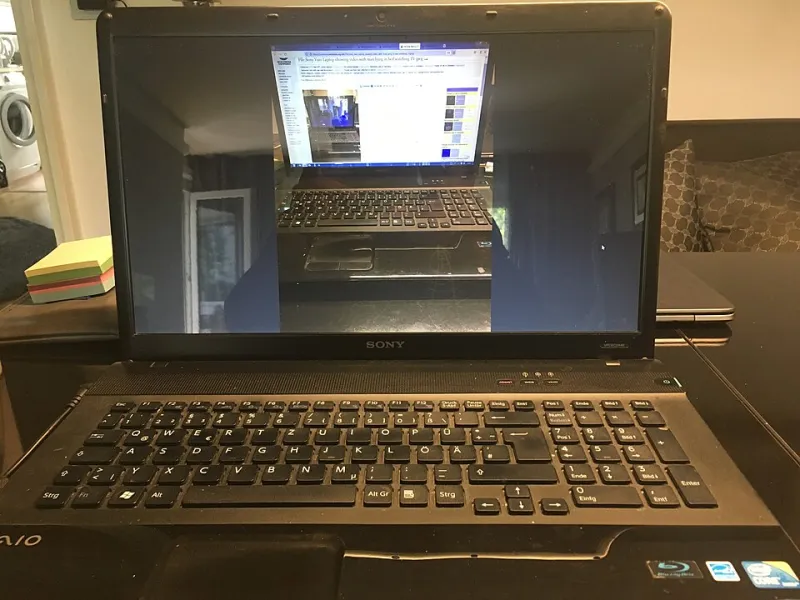
Photo: Pittigrilli, CC BY-SA 4.0, via Wikimedia Commons
There's a version of me who watches movies the correct way: lights off, phone face-down, fully committed to the illusion. That version of me did not exist last month, when I put on When Harry Met Sally for roughly the fortieth time and, for reasons I still can't fully explain, opened the YouTube comment section on my laptop next to the TV.
What I expected was noise. What I got was the most useful feedback session of my writing life — delivered entirely by people whose names I'll never know.
The Comment Section Is a Focus Group That Never Goes Home
Here's the thing about comment sections and Reddit threads on old movies: they're not really about the movie. They're about what the movie did to someone. Scroll through a popular upload of any beloved film and you'll find a running, unfiltered audit of every emotional beat.
"I lose it every time at the airport scene. Every. Time."
"Am I the only one who thinks the ending is a little rushed?"
"My mom showed me this when I was 9 and now I'm 42 and it still works."
That last one is doing something no workshop ever did for me. It's telling me about longevity. About how a story lives in a person for decades and keeps paying rent. Workshop feedback is famously unreliable because it's given by people who are also writers, people who can't turn off their own editorial brains. Comment sections have no such problem. These are civilians. Pure readers. They don't know what a second-act turn is, but they know exactly when a movie got boring, and they will tell you in all caps.
Reading Generously Is a Skill, Not a Mood
I'll be honest: my first instinct scrolling these threads was snobbery. Half the comments are typos, hot takes, and arguments that miss the point entirely. But somewhere around the forty-minute mark of my rewatch, something shifted. I stopped reading the comments as a critic and started reading them as a researcher.
The trick is to look for patterns, not verdicts. One person calling a character "annoying" tells you nothing. Fifty people independently pointing at the same scene and saying "this is where it got real" — that's data. That's the audience telling you, in their own language, where your story earned its keep.
When I did this with a few other films — some comfort rewatches, one movie I actively dislike — the pattern held. Audiences are startlingly consistent about three things:
- They remember moments, not plots. Nobody summarizes the narrative architecture in the comments. They quote lines. They timestamp the scene that made them cry in 2009 and again yesterday.
- They forgive a lot if they love someone on screen. Plot holes that would sink a lesser film get a free pass because "he's just so charming in this."
- They attach stories to their own lives. Half of every thread is people narrating where they were when they first watched. The movie is a hook; the comment is really about them.
That third one rearranged something in my head. Every comment is a small confession that the reader/viewer is co-authoring the experience. Which means the question I should be asking at my desk isn't "is this scene good?" It's "what will someone be doing in their life when this scene finds them?"
The Disagreement Is the Curriculum
The best part of the crowdsourced seminar isn't the praise. It's the fights. Under one movie, a comment with 12,000 likes says the ending is perfect, and directly beneath it, someone with 8,000 likes says the ending is a coward's ending. Both sides make real arguments. Both sides cite the same scenes as evidence.
That fight taught me more about endings than any craft book, because it revealed something uncomfortable: the ending wasn't one thing. It was a mirror. The people who loved it wanted the story to be about hope. The people who hated it wanted it to be about honesty. The film couldn't fully be both, so it split the audience down the middle — and both halves went home and wrote comments.
As someone who agonizes over every ending I write, this was weirdly liberating. You're not going to get everyone. You're going to get someone, hard. The goal isn't universal approval; it's a comment section worth fighting in.
What I Changed Because of Strangers
I've started keeping a note in my phone called "audience receipts." Whenever a comment thread reveals something — a moment that consistently lands, a structural complaint that shows up across platforms, a line people quote back like scripture — it goes in the note. When I'm stuck on my own pages, I read it.
It has quietly changed my drafting. I write toward moments now instead of toward beats. I ask whether a scene can survive being someone's 2 a.m. comfort watch. I've stopped pretending readers will experience my work in one perfect sitting, because the comments have shown me, hundreds of times, that nobody consumes anything that way. They watch in pieces, across years, through the filter of whatever they're going through.
Your Readers Are Already Out There Talking
We tend to imagine our future readers as an abstraction — a demographic, a market, a query letter's "comp audience." But they're not abstract. They're in the comments under your favorite movie right now, being funny and wrong and devastatingly honest. They're telling you, for free, exactly how stories work on human hearts.
You just have to read them generously. And maybe keep your phone face-down for the actual movie. Some things you still owe your full attention.