My Grandmother's Spice Tin Was a Master Class in World-Building, and I Only Realized It When I Got It Wrong
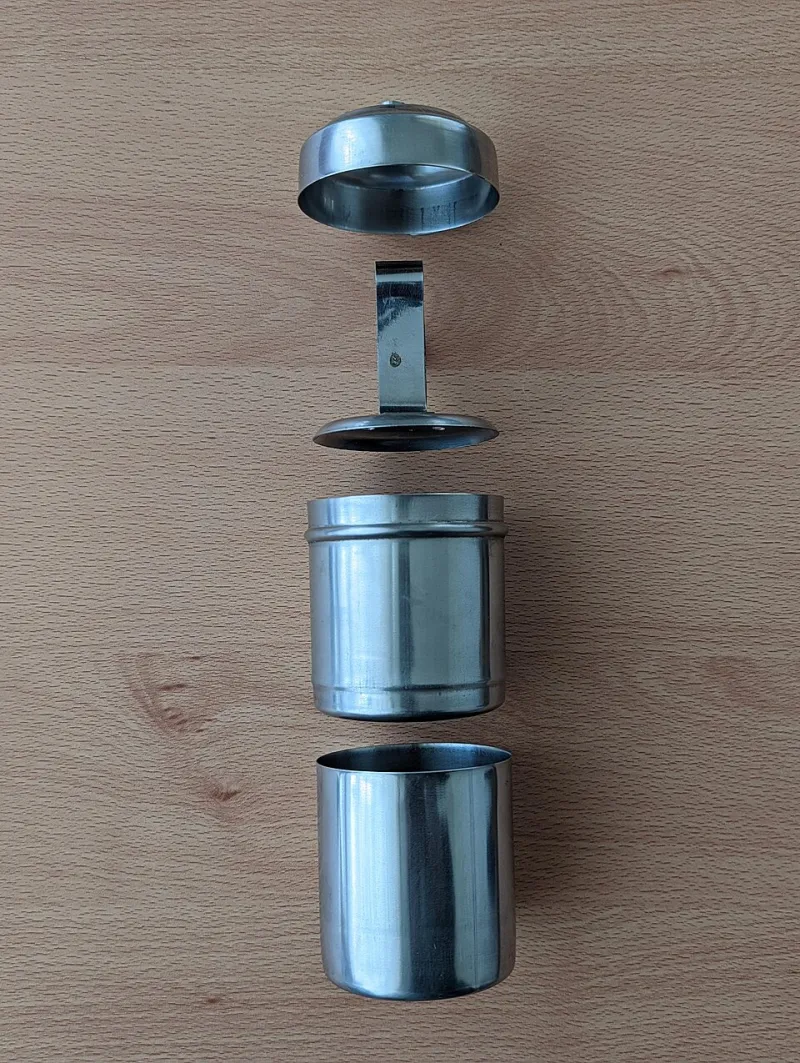
Photo: Vimkay, CC BY-SA 4.0, via Wikimedia Commons
The masala dabba sat in my grandmother's kitchen in Delhi like a small metal solar system. Seven round tins nested inside a bigger tin, each one holding a different universe: turmeric like burnt gold, cumin that rattled when she shook it, the dried red chilies she'd break over the pot with one hand while stirring with the other. I watched her open that tin thousands of times. I could not tell you a single measurement she ever used, because she never used one.
Last month, standing in my apartment in Chicago, I decided to rebuild it. From memory. No calling my mom, no YouTube tutorial, no ordering a pre-assembled spice kit from a fancy grocery store with a name like "Global Pantry Co." Just me, an empty stainless steel dabba I bought online, and whatever my brain had bothered to save.
It went badly. And then, weirdly, it went instructively.
What Memory Actually Keeps (Spoiler: Not the Facts)
Here's what I remembered with total confidence: the look of the dabba, the weight of the lid, the way the turmeric had permanently stained the rim of its compartment a dusty yellow-orange, like a sunset that never quite finished. I remembered that the cumin jar was never full and never empty. I remembered the sound — that dry rattle against the lid when she was deciding.
Here's what I did not remember: the actual proportions. What else went in there besides the big seven? Was the asafoetida in the dabba or in a separate container? I stood in my kitchen holding a bag of whole coriander, realizing I had consumed this spice blend my entire childhood and retained almost nothing usable about its construction.
Sound familiar? It should, if you write.
The Difference Between Describing a Place and Rebuilding One
For years, my settings have been descriptions. "The kitchen was warm and smelled of spices." True. Useless. It's the equivalent of telling someone about the dabba instead of handing it to them.
Rebuilding the dabba forced me into a different mode. I couldn't just gesture at "warmth." I had to answer specific questions: Which spice was loudest in the blend? What did I reach for first? What did I get wrong, and what did getting wrong reveal about what I'd actually been paying attention to all those years?
That's what a real setting is. Not a postcard — an inventory with consequences. When my grandmother cooked, the dabba's geography mattered. The hing was next to the salt because it needed to be reached fast before the oil got too hot. That's not decoration. That's architecture. Every placement implied a body moving through the space, a sequence of decisions, a person with habits.
When my first attempt at the blend came out tasting like warm cardboard, it wasn't because I lacked ingredients. It was because I lacked the choreography — the order things entered the pan, the heat, the patience. On the page, this is the difference between "the room was cluttered" and knowing exactly which chair your character has to move to get to the window.
The Gaps Are the Story
The most interesting part of the whole exercise was cataloging what my memory had silently deleted. I remembered the chili powder was "spicier than the American kind" — a fact I've said a hundred times to friends at potlucks. But I could not, for the life of me, remember what the salt tin looked like. Salt. The most-used compartment. A blank.
I've started treating those blanks like craft tools. When I catch a gap in my sensory memory of a place, that's usually where the emotional truth lives. I remember the smell of her cardamom but not the salt tin because cardamom meant dessert, meant being handed a cup of chai, meant being loved in a specific way. The salt was just infrastructure. My memory kept the meaning and discarded the inventory.
That's exactly how readers experience a scene, by the way. They don't keep your floor plan. They keep the detail that carried feeling. Which means the writer's job isn't to describe everything — it's to know everything, and then choose the two or three details that carry the charge.
What Ended Up in My Dabba
My rebuilt version is wrong in ways that are becoming their own tradition. The cumin is too dominant because I over-toasted it that first nervous night. I added fenugreek because my gut insisted, and my mom confirmed later that yes, there was always methi — a detail my conscious mind had lost but my hands apparently remembered. The turmeric stains my counter now, same as it stained hers.
It's not her dabba. It's a cover version. But here's the thing: every writer building a setting from memory or imagination is doing a cover version too. You can't reproduce the original room. You can only rebuild it from what stuck, and what stuck is the story of you — what you noticed, what you loved, what you were too busy feeling to record.
So now, when a scene feels flat, I don't add more adjectives. I ask the dabba questions: What does this place sound like when someone's deciding something? What's stained permanently? What's missing from my memory, and why?
The tin sits on my stove now. It rattles when I shake it. My scenes have gotten better, but honestly, the chai has too.