The Bouncer at the Door of My Notebook: How I Decide Which Stories Get In

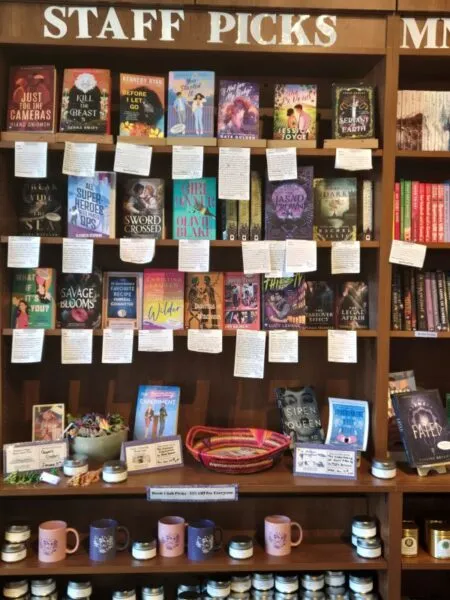
Photo: rawpixel.com rawpixel, CC0, via Wikimedia Commons
Every story idea has to get past the bouncer.
Not a literal bouncer — although I imagine mine as a tired woman in a leather jacket, standing at the door of my notebook, arms crossed, unimpressed. She's seen it all. She's heard me pitch a dozen vampire novels. She does not care about your three-act structure.
Her name, unofficially, is The Test, and she runs a short list of questions before any idea gets let inside. Some ideas sail through. Most get turned away. A truly dangerous few lie their way in. This essay is me finally writing down the list, mostly so I stop re-litigating the same decisions at 1 a.m.
Question One: Would I Tell This at a Party?
Not would it be impressive — would I actually say it.
There's a specific feeling when someone at a backyard barbecue in Ohio asks what I'm working on and my answer makes me light up. Not them — me. If I can't get through two sentences of my own premise without my voice going flat, that's data.
My novel-in-progress passed this one by accident. I described it to a stranger at a friend's housewarming, expecting to apologize for it, and instead heard myself say, "It's about a woman who keeps inheriting other people's unfinished business," and then I kept talking. Unprompted. For a while. The stranger looked mildly interested, which for a housewarming conversation is a standing ovation.
Conversely, a literary thriller I outlined for six weeks died the moment I realized I described it to people in an apologetic mumble, like I was confessing something. If I'm embarrassed by the elevator pitch, the story knows. Stories always know.
Question Two: Can I Survive Writing It Badly First?
This one is the mercy of the list, and also the cruelest.
Some ideas are so fragile that a bad first draft kills them permanently. I can tell within a chapter whether an idea can withstand me being mediocre at it. The good ones get better when I write them badly — the mess reveals what they actually are. The bad ones just get worse, like watching a soufflé deflate in real time.
An essay about my father's handwriting passed this test easily. The first draft was sentimental garbage. The third draft was a real piece of writing. An idea I once had for a serialized audio drama did not survive its bad draft — the format exposed that there was no story underneath, just a vibe and a microphone.
If an idea can't survive my worst, it doesn't deserve my best. Harsh? Sure. But so is the submission process.
Question Three: Am I the Only Person Who Can Write This?
I stole this one, like all good questions, from years of workshop comments I didn't understand at the time. It's not about being special. It's about specificity.
If a story could be written equally well by anyone with an internet connection and a MFA, it's probably not mine. But if it requires my particular combination of obsessions — Indian-American childhood, half-remembered Bollywood plots, a deep suspicion of people who say "circling back" in meetings — then it has a pulse.
This question has killed more ideas than any other. It's also the only one that has ever rescued an idea from the pile. A failed short story about a call center sat in my drawer for two years until I asked it this question, realized I'd been writing it as a person who'd never worked in one, and rewrote it from the inside out. It became one of the best things I've published.
The Ideas That Lied Their Way In
The bouncer is good, but she's not perfect.
The most dangerous ideas are the ones that pass every question while being, fundamentally, about something I don't actually care about. They sound great at parties. They survive bad drafts because they're structurally sound. They're specific to me on paper. And they are hollow, because I was answering the questions correctly instead of honestly.
I spent four months on a novella that aced the entire test and was dead on the page. The problem wasn't the answers — it was that I'd reverse-engineered the idea to pass. I'd written a story the way you fill out a form.
So now there's a final, unwritten question, the one the bouncer asks quietly, after everyone else has left: Do you actually want to spend a year with this, or do you just want to have written it?
Those are very different desires. Only one of them produces a finished story.
Keeping the List, Breaking the List
I don't follow the test religiously anymore. Sometimes an idea fails question one and I write it anyway, out of spite, and it turns out fine. Sometimes an idea passes everything and still flops, because tests are for people and stories are for weather — you can forecast, but you can't control.
But the list stays taped inside my notebook, next to a grocery list and a phone number I no longer recognize. Five questions, one bouncer, zero mercy. It's the closest thing I have to a creative process, and honestly, it's mostly just a very organized way of asking myself the thing every writer asks at the door:
Is this real? Can I do it? Will I still want it tomorrow?
Most nights, the answer is no. But every so often, the bouncer steps aside, and something gets in.