Timestamped Tears: The Field Notes From Rewatching the Show That Broke Twelve-Year-Old Me
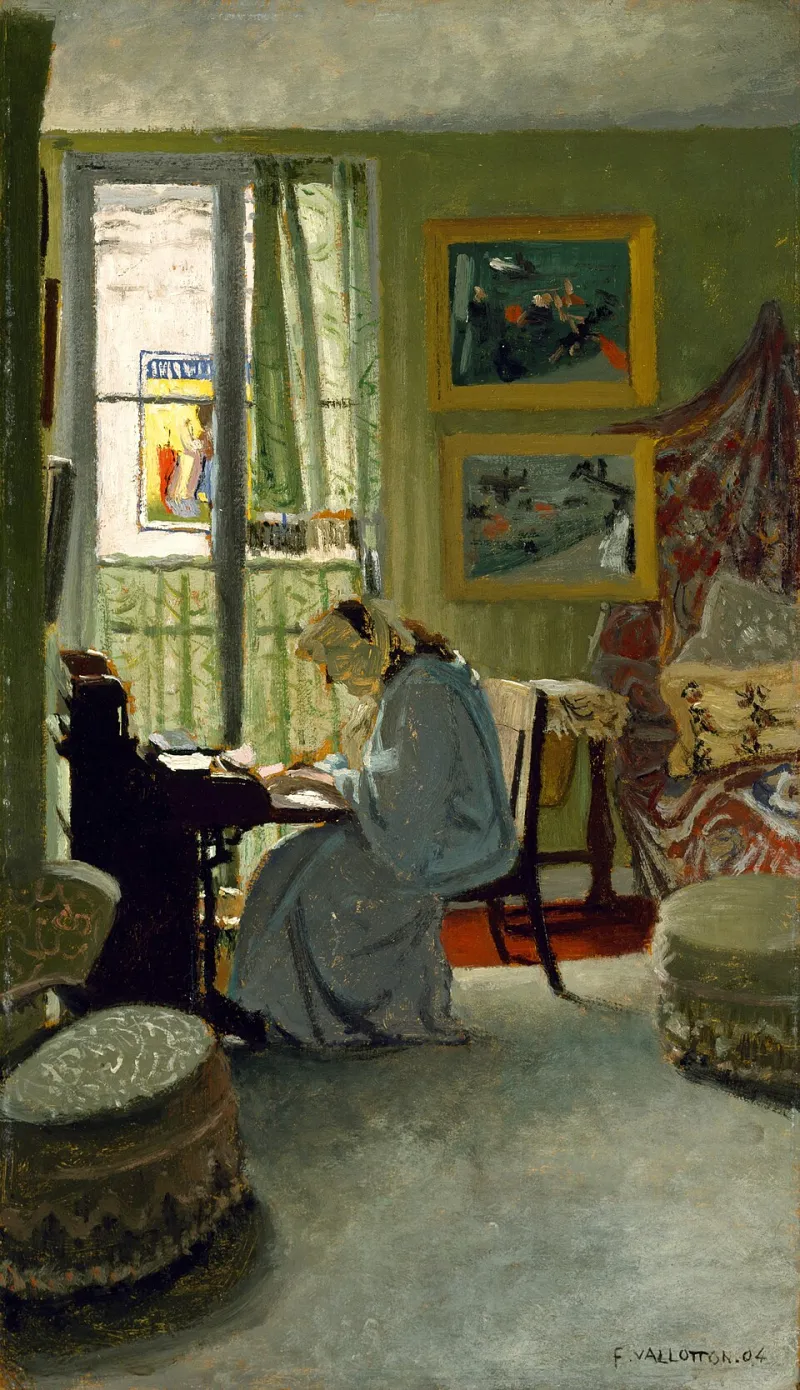
Photo: Félix Vallotton, Public domain, via Wikimedia Commons
The rules were simple, which is the only kind of rules I follow: rewatch the show that made me sob into a pillow in 2003, and keep a journal of every feeling as it happened. Time-stamped. No editing. No skipping ahead to the good parts. If I wanted to pause and yell into the void, I had to write the yelling down first.
I picked Joan of Arcadia — the one where God keeps showing up as random people and a teenage Joan Girardi does divine chores while being sullen about it. Twelve-year-old me thought it was the most profound thing ever broadcast. Thirty-something me was about to find out what survives the translation.
The Journal Entries, Unedited and Slightly Humiliating
8:47 p.m., Episode 1. "Okay the premise is kind of silly actually. God is a mailman? Cute mailman, though."
9:12 p.m. "Wait. The brother is paralyzed. I forgot the brother. I forgot EVERYTHING about the brother."
9:31 p.m. "This theme song is doing something to my chest cavity. Noted. Concerned."
Episode 4, 9:58 p.m. "Oh no. Oh no, I remember this scene. I remember crying HERE. Why am I not crying? Am I broken? Is this what growing up is — a slow anesthesia?"
That last entry is the one that got me. Because here's what I'd told people for twenty years: Joan of Arcadia destroyed me. I built a whole identity around it. I told writing groups it was my origin story. And the show, it turns out, is good — genuinely, structurally good — but the moment I'd enshrined as My Big Formative Cry? I watched it dry-eyed, eating tortilla chips, mildly annoyed at the commercial-break pacing.
Memory Is a Terrible Archivist
Here's what I think happened, based on my extremely scientific journal-to-memory cross-reference: my brain didn't save the show. It saved the state I was in while watching it. Twelve is when my family moved for the second time in three years, when I ate lunch in the library, when I needed a story to tell me that a confusing life might have some kind of plan behind it. Joan gave me that. My memory filed the relief under the show's name and never itemized the receipt.
We do this with everything. Ask anyone about their favorite childhood movie and they'll describe a feeling with a soundtrack attached. The actual scenes are mostly set dressing. Memory keeps the emotional headline and cuts the footage for time.
What This Means for the Writer I Became
Sitting there with my journal, I realized something slightly uncomfortable: every story I've written about childhood has been written from the headline, not the footage. I've been adapting a memory of a memory and calling it truth.
And honestly? That's not a scandal. That's the job. Fiction was never the news. But the experiment taught me to hold my remembered feelings a little more lightly — to ask, before I canonize a scene in an essay, did that actually happen, or did I just need it to?
The most honest thing in my journal wasn't about the show at all. It was the entry from the finale, 10:40 p.m.: "Still didn't cry. But I stayed up to finish it, alone, on a Tuesday. Maybe that was the real feeling all along. Not sadness. Company."
Twelve-year-old me wasn't crying at a TV show. She was grateful to feel understood. The show just happened to be in the room.
I'll be fact-checking accordingly from now on — and keeping the journal. Timestamps and all.