I Found My First Script in a Google Doc Called 'FINAL_final' and We Had a Long Talk
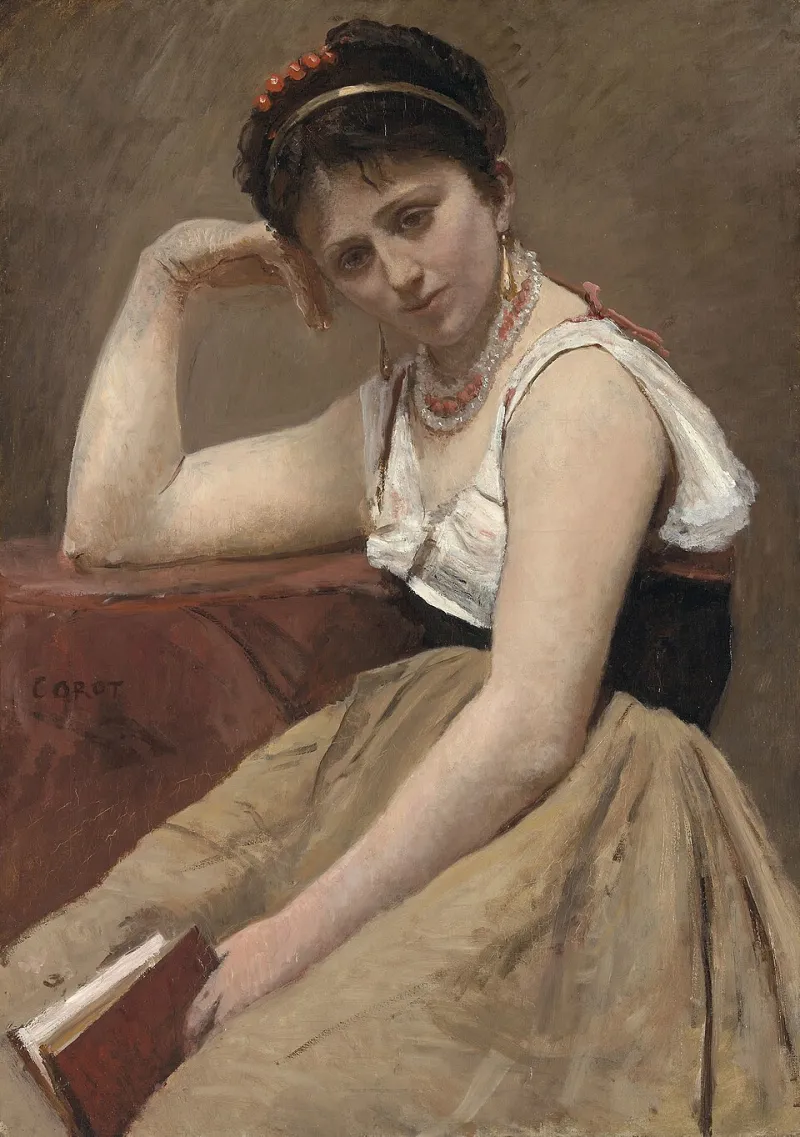
Photo: Jean-Baptiste Camille Corot, Public domain, via Wikimedia Commons
The file was called FINAL_final_v3_ACTUALLY and it lived in a Google Drive folder I haven't opened since roughly 2014. My first pilot. Forty-two pages of a workplace comedy about a failing community theater in Ohio, written by a version of me who had watched a lot of 30 Rock and understood none of it.
I opened it on a Sunday night, the way you open old journals or yearbook photos — braced for damage. And look, the damage was there. But so was something I did not expect, and I've been chewing on it all week.
First, the Crimes
Let's do the autopsy honestly, because this thing has vibes instead of a plot.
The protagonist had no want. She had a quirky job and a nemesis, which I apparently believed was the same thing as an arc. Every character spoke in the same voice — my voice, specifically, the voice of a person who had never worked in a theater or, arguably, been in a real argument. There's a scene where two coworkers exchange fourteen lines of banter and the scene ends with neither of them wanting anything. It just... stops. Like a firework that fizzles.
And the pacing. Oh, the pacing. Act Two is a swamp. I introduced a love interest in the teaser who then evaporates for twenty-two pages, presumably because I forgot he existed, which is also what the audience would have done.
Ten years ago, I read this same script and thought it was almost there. That's the part that gets me. I genuinely believed one more polish pass would fix it. Craft lessons are invisible in real time the way your own accent is invisible in your own ears.
But Then the Weird Part
Here's what I wasn't ready for: buried in the rubble, my younger self made some genuinely sharp instincts. And they weren't the ones I would've guessed.
The cold open works. Like, actually works. Ninety seconds, no dialogue, just our heroine failing spectacularly at a community raffle in front of a crowd of retirees. It's visual, it's specific, it's funny, and it tells you everything about who this person is without a single line of exposition. Past me didn't know the term "visual storytelling." She just did it once and then never again, like a bird that builds one perfect nest.
There's also a running gag about a haunted photocopier that pays off in the tag, and the payoff is earned. Setup, escalation, reversal — the bones of it are right. I don't know how she knew to do that. I don't know if present me could do it as cleanly.
And the theme — the actual beating heart of the thing — is people who refuse to quit a losing endeavor because leaving would mean admitting they cared. Which is, not to be dramatic, the thesis of my entire career. I wrote my own confession at twenty-three and didn't read it until now.
What Our Earliest Work Owes Us
I used to think of early work like a baby photo — something to be embarrassed by, kept around only for humility. But sitting with this script, I think that framing is wrong. Or at least incomplete.
Your first script isn't a failed version of your current work. It's a fossil record. It shows you what you were already drawn to before you had the vocabulary to name it: the instincts that survived, the habits that didn't, the obsessions that were there before technique got involved. My taste for cold opens, my weakness for ensemble banter, my inability to write a protagonist who doesn't overcommit — all of it was already on the page, in embryo, mistakes and all.
There's a version of craft education that's all forward-looking: learn the rules, apply the rules, get better. But re-reading old work is a different kind of class. It's retroactive. You finally understand the lesson because you can see the shape of the mistake from the outside. Hindsight isn't just 20/20 — it's the only teacher that shows up on time.
A Letter I Didn't Plan to Write
So, past me, since the doc is open:
The photocopier gag is good. Keep the photocopier. Give your heroine something to want by page five — not a nemesis, a want — and let the love interest exist on more than one page. Also, everyone in Ohio does not need to be as funny as you wish you were. Let some of them just be tired.
But thank you for writing forty-two bad pages instead of zero. Thank you for the cold open. Thank you for accidentally telling me the truth about myself a decade early, in a language I could only translate later.
I'm not going to rewrite this pilot. It belongs to who I was. But I'm stealing the haunted photocopier for something new, and I have a feeling she'd be fine with that.
Now if you'll excuse me, I need to go rename about eleven files called FINAL_final.