The Machine Picked My Movies, and Apparently It Knows Me Better Than My Friends Do
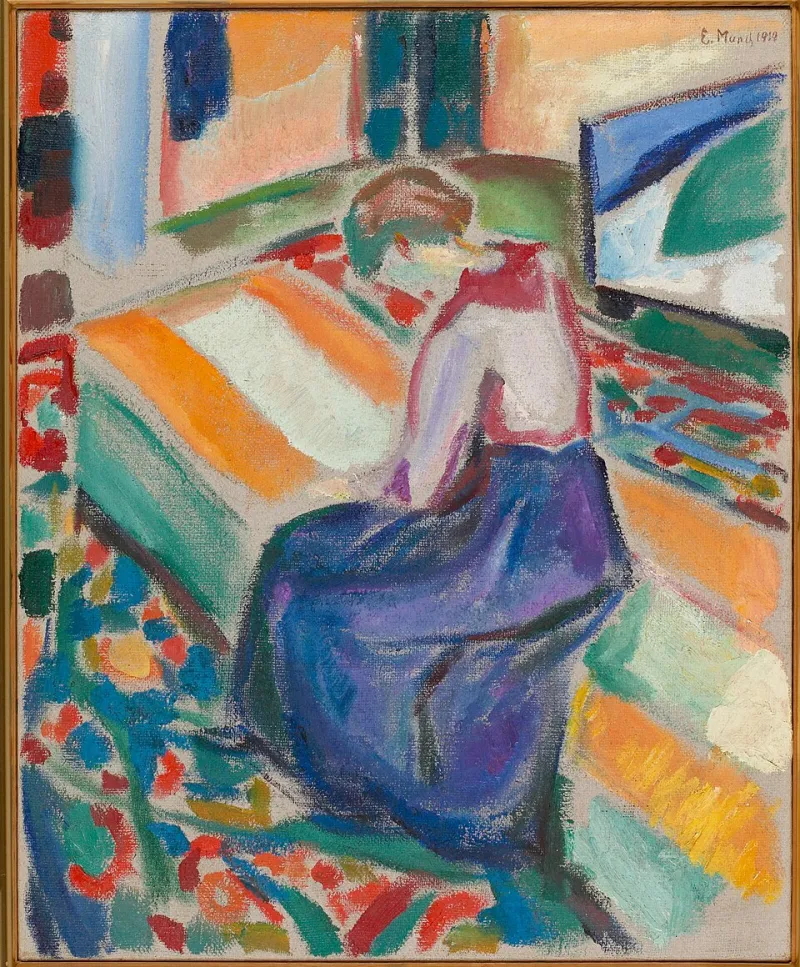
Photo: Edvard Munch, Public domain, via Wikimedia Commons
Here's the deal I made with myself on a Friday night, somewhere between finishing the dishes and opening Netflix for what I swore would be ten minutes: for the entire weekend, I would not choose a single thing to watch. Whatever the home screen served up first, that's what went on. No skipping within the first thirty minutes. No bailing on a movie because the trailer voice annoyed me. Full surrender to the machine.
I want to be clear that I did this for content. Or at least that's the lie I told myself. Really, I did it because I've spent the last four months rewatching the same three comfort shows and calling it "research."
Friday, 9 PM: The Machine Opens With a Gut Punch
The first thing my algorithm served me was a documentary about competitive speedcubers — people who solve Rubik's Cubes at speeds that look like video glitches. I would never have picked this. My friends would never have picked this. And yet, forty minutes in, I was tearing up because a nineteen-year-old from Ohio explained that cubing was the first thing that made his brain feel like a gift instead of a problem.
So that's how the weekend started: with the algorithm knowing exactly which unhealed part of me to poke.
Saturday: A Whole Day of Things I'd Been Actively Avoiding
Saturday's lineup got weird. A slow-burn Icelandic drama about two brothers repairing a fence. A cooking competition show from 2016 that somehow never crossed my feed. A documentary about the making of a Broadway flop that closed in nine days.
The Icelandic one nearly broke me. Nothing happens in it, and everything happens in it. Two men who don't talk about their father, fixing a fence, and by the end I was sitting on my couch in a puddle thinking about my own dad and the phone call I keep meaning to make.
Here's what unsettled me: the algorithm had clearly clocked that I watch a lot of family dramas and cry at them. It wasn't showing me surprises. It was showing me patterns I hadn't admitted to. I keep a mental list of "my taste" — sharp comedies, clever pilots, ensemble shows with great banter. The machine's list of my taste apparently reads: "sad woman, likes watching people reconcile, will absolutely watch a documentary about any niche skill."
The machine was right. That's the humiliating part.
What I Avoid, According to a Corporation
By Sunday morning I'd started keeping notes, because that's what I do instead of going to therapy at a normal frequency. The throughline of everything the algorithm picked: stories about repair. Fixing fences, fixing friendships, fixing a flop, fixing a cube. Nothing about reinvention, nothing about starting over, nothing with a montage where someone moves to a new city and finds themselves.
I gravitate toward reinvention narratives when I'm choosing. Apparently what I actually need — what the data knows before I do — are stories about people who stay and fix what's broken. Which is a genuinely uncomfortable thing to learn from a recommendation engine on a Saturday afternoon.
So Can an Algorithm Curate a Personal Essay?
Sort of, yes, and that's the weirdly emotional part. Every good personal essay I've written started with something I didn't choose — an overheard conversation, a wrong turn, a documentary about speedcubing. Choice is where my taste gets defensive. Surrender is where it gets honest.
By Sunday night I made my dad the phone call. He picked up on the second ring. We talked about the fence situation at his house, actually, which — come on.
I won't be handing over the remote permanently. I love my comfort shows and I'm not apologizing for that. But I've decided the algorithm gets one pick per week, unskippable, like a weird little Assigned Homework program. The machine doesn't know me. But it does know what I watch, and apparently the gap between those two things is where the good material lives.