Before There Were Cliffhangers on TV, There Was My Grandma's Kitchen Radio
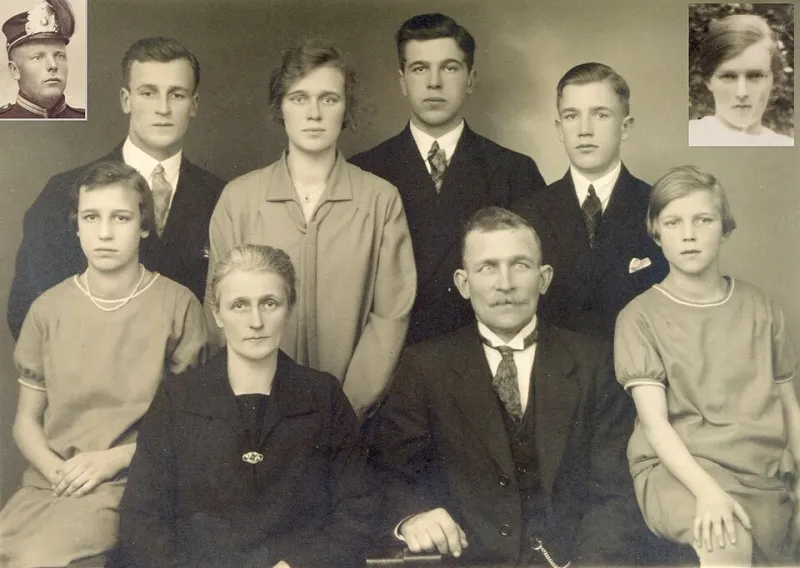
Photo: N. Aug. Hedblom of Falun Korsnäs (left insert) & unknown family assistants, Demitz Archives acquired by FamSAC, Public domain, via Wikimedia Commons
Every afternoon at 4:15, my grandmother turned on the radio. Not the TV — the radio, an old tabletop unit with a dial she'd worn smooth from decades of the same motion. This was in her later years, long after radio dramas had left the airwaves, but the habit had outlived the format. She listened to news, old Bollywood songs, and occasionally, on cassette, recordings of serials her sister had mailed her. She knew every character. She'd resume their stories mid-sentence, no recap needed, like picking up a phone call with a sibling.
At the time I thought this was just her thing. It took me years of writing about television to realize she'd been raised on the original version of the thing I now do for a living — and that the writers of mid-century radio solved problems we're still fumbling with today.
The Original Binge
We talk about the streaming era like it invented serialized storytelling: arcs that stretch across seasons, characters who change over years, the dopamine of "one more episode." But between the 1930s and 1950s, American radio ran serialized dramas fifteen minutes a day, five days a week, for years. The Guiding Light started on radio in 1937 and ran, in one format or another, for seventy-two years. Shows like Ma Perkins delivered over 5,000 episodes.
Think about the craft constraint there. A radio serial writer had to do three things every single day: catch up a listener who missed yesterday, advance the story meaningfully, and end on a hook strong enough to guarantee tomorrow's audience. No cold opens. No prestige padding. No eight-episode season with a two-episode runway. Every episode was load-bearing.
And they did it in audio only. No faces, no sets, no title cards. Just voices, sound effects, and the listener's imagination doing the heavy lifting — which, incidentally, is why radio characters felt so intimate. Everyone's private version of the story was casting their own movie.
Cliffhangers Were a Business Model
Here's the part that gets lost when we romanticize this: the cliffhanger wasn't an artistic flourish. It was survival. These shows were sponsored — literally branded, like The Lux Radio Theatre — and sponsors could read a ratings dip in a week. If Tuesday's episode didn't make people come back Wednesday, the show died.
So writers developed techniques that look remarkably like what prestige TV gets credited for now:
- The withheld reveal. Radio writers learned to stretch a single secret — a letter, a diagnosis, a pregnancy — across weeks of episodes. Breaking Bad's slow-drip secrets are doing the same thing with a bigger budget.
- The rotating POV. Serials followed whole communities, not just protagonists, so a minor character from Monday could carry Thursday. Ensemble storytelling before The Wire made it a thesis statement.
- The callback. With no recaps available, writers built repetition into the dialogue itself — characters restating stakes naturally, so a listener who'd missed a week was never lost. Modern shows do this with cold opens and "previously on" segments. Radio did it in-character, invisibly.
The best radio writers, like the legendary Irna Phillips, essentially invented the writers'-room model out of necessity — training young writers, mapping story arcs on wall-sized boards, juggling dozens of threads at once. That's the job description of every showrunner alive today.
What We Lost in the Upgrade
I'm not here to argue streaming is worse. Some of the best writing in the medium's history exists because showrunners were finally trusted with long arcs and no commercial breaks.
But I do think we've lost something the radio writers understood by force: the daily appointment. Their audience didn't binge. They returned. Every day, the story asked for a small piece of the listener's life, and the listener gave it, and the relationship compounded. My grandmother's 4:15 ritual wasn't consumption — it was attendance, closer to church than to Netflix.
Binge-model TV optimized for the marathon. Radio optimized for the return visit. And a story built for the return visit has to be generous in a different way — it has to make you feel welcome whether it's been a day or a decade since you last checked in.
That's the note I take from my grandmother's kitchen, and from those crackling cassette tapes of serials her sister mailed across an ocean: the oldest trick in serialized storytelling isn't the cliffhanger. It's the welcome mat. Make people want to come back — not because they'll find out what happens, but because the characters know them, and the story has been waiting.