Five Scenes I Keep Rewinding (And What They Secretly Taught Me About Craft)
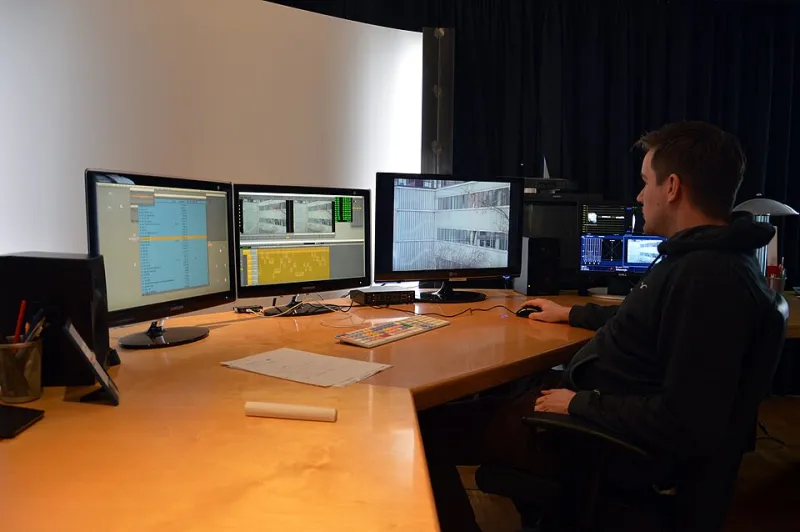
Photo: Klaus Eichler, CC BY-SA 3.0 de, via Wikimedia Commons
I took exactly one screenwriting class in college, and the most useful thing the professor said was also the most deflating: "Nobody cares about your plot. They care about your scenes."
He was right. Plots are easy to summarize and hard to feel. Scenes are where the feeling lives. So today, a little craft column on five scenes I've probably watched fifty times — and the specific writing lesson each one hands you, free of tuition.
1. The Cold Open That Says Everything Without Saying Anything — Up (2009)
You know the one. Four minutes, zero dialogue, and an entire marriage. Carl and Ellie meet, marry, save for Paradise Falls, and lose the savings to life's endless small emergencies — a tire, a broken leg, a storm. Then Ellie dies, and Carl is alone in a house full of memories before a single word has been spoken.
The takeaway: Montage is compression, and compression is trust. The filmmakers trusted the audience to understand a fifty-year relationship from gestures — a tie, a picnic, a coin jar. When you're tempted to have characters explain their history to each other, cut it. Show the coin jar instead. Backstory delivered through objects and repetition will always outperform backstory delivered through dialogue.
2. The Dinner Table Interrogation — The Godfather (1972)
Michael Corleone telling Kay that his family isn't a killer — "That's my family, Kay. It's not me." — is a masterclass in dramatic irony. We've just watched him orchestrate a murder. Kay hasn't. The scene is a love confession and a lie in the same breath, and Coppola frames Michael through a closing door as he says it.
The takeaway: Subtext needs a gap between what the character says and what the audience knows. If your reader knows the truth your character is hiding, every line of dialogue does double duty. Write the scene twice: once as the character means it, once as the audience hears it. The distance between those two versions is the scene.
3. The Monologue That Isn't About the Thing — Good Will Hunting (1997)
Robin Williams, on a park bench, telling Will that his encyclopedic knowledge of the Sistine Chapel isn't the same as standing in it. "You don't have the faintest damned idea what's gonna leave your lips next" — wait, wrong scene, but you get me. The point is: Sean never lectures Will about his trauma. He talks about Michelangelo, war, and love, and the lecture arrives sideways.
The takeaway: Thematic speeches land hardest when they're aimed at a different target. If your character needs to confront someone, let them do it through a story, a metaphor, or an argument about something else entirely. Directness is for drafts. Obliqueness is for scenes.
4. The Silence Before the Explosion — Breaking Bad, "Ozymandias" (2013)
The phone call. You know the one — Walt, on the phone with Skyler, pretending to be a monster because he knows the police are listening. On the surface: cruelty. Underneath: the single most loving thing Walter White ever does. Bryan Cranston's face as he listens to her call him a coward carries the entire episode.
The takeaway: Give your character two goals at once, and make one of them secret. The best scenes aren't about conflict alone — they're about a character performing one objective while pursuing another. If your scene feels flat, ask what your character is hiding from the other people in the room, and what they're hiding from the audience. Then let the performance crack, just slightly.
5. The Quiet Ending — Lost in Translation (2003)
Bob whispers something into Charlotte's ear at the end, and Sofia Coppola gives us none of it. No subtitles, no resolution, no promise. Just a hand on the back of his head, a smile, and a cut to the street.
The takeaway: You don't have to resolve. Audiences in the streaming era are trained to want answers, but the scenes that haunt us are the ones that leave a door open. If your ending explains itself completely, it dies the moment the credits roll. Withhold one thing — a word, a motive, a decision — and your story keeps living in the viewer's head on the drive home.
Your Homework (Yes, Homework)
Here's the exercise I actually do: pick a scene you love, any scene, and watch it three times. First, just watch. Second, write down every piece of information you learn and how you learned it — dialogue, object, performance, framing. Third, mute it and watch it again.
That third viewing is where the craft lives. It shows you how much of storytelling was never words at all.
What scenes would make your list? Drop them in the comments — I'm always collecting new ones to rewind.